An artArt refers to a diverse range of human intellectual and expressive activities and the outcomes of those activities. Within this context art is further defined as visual art and includes painting, drawing, sculpture, printmaking, photography and work made using digital media., craftCraft can be designed as intelligent making. It is technically, materially and culturally informed. Craft is the designing and hand making of individual objects and artefacts, encouraging the development of intellectual, creative and practical skills, visual sensitivity and a working knowledge of tools, materials and systems. More about craft can be found here and designDesign shapes ideas to become practical solutions and propositions for customers and users. Design is all around us, everything man made has been designed. The majority of designers work in teams, following a design brief and a process towards realising a commercially driven product, building, system or service curriculumIn education, a curriculum (or curricula) is broadly defined as the totality of student experiences that occur in the educational process. The term often refers specifically to a planned sequence of instruction, or to a view of the student's experiences in terms of the educator's or school's instructional goals. A curriculum may incorporate the planned interaction of pupils with instructional content, materials, resources, and processes for evaluating the attainment of educational objectives. Curricula are split into several categories: the explicit, the implicit (including the hidden), the excluded, and the extracurricular. Curricula may be tightly standardized or may include a high level of instructor or learner autonomy. Many countries have national curricula in primary and secondary education, such as the United Kingdom's National Curriculum. would ideally be formed from broad experiential opportunities providing access and opportunities to varied mediaDifferent materials used by artists, such as paint, charcoal, clay and thread. Media is the plural of MEDIUM. In this context, it refers to the thing, substance or process you use to produce an artwork. For example, an oil painting is painted using the medium of oil paint; paint, ink and clay are different media. It is also used to refer to something that binds pigments together, such as oil, acrylic, gum, egg yolk or wax., processes and techniquesA procedure, formula or routine by which an outcome or artwork is achieved, to include weaving thread into cloth with a darning needle, carving wood with a chisel and throwing clay on a wheel to make a pot.
Such a curriculum should ensure rigorous cognitive challenges, informing ideas, discourse, and practical and creativeBeing creative or 'creativity' relates to or involves the use of the imagination or original ideas to create something. challenges while demonstrating engagement with and respect for diverse cultures.
A lively, flexible and wide-ranging art and design curriculum is essential if it is to engage and motivate. Students will benefit most from variety, choice, interesting contexts and challenges within their learning.
The art and design department, classrooms and studios should be a place where all pupils and students want to be. These learning spaces should be inspiring, surprising and rich with knowledgeFacts, information, and skills acquired through experience or education; the theoretical or practical understanding of a subject. and creative possibilities.
LearnersA learner is an individual who is willing to learn and understand new things. Learning is a process of understanding and acquiring knowledge of new things and concepts. An individual can be a learner at any point in time they want. Factors like age, gender, etc., do not come in between the learning of the learner. need to be guided, taught, inspired and challenged to improve their knowledge, skillsTechniques and attributes acquired through learning, engagement and practice and understanding. To do this effectively, art educators will seek to develop knowledge and skills to emphasise the development of creative behavioursCreative behaviour has been viewed as the creative act, or a set of acts, which is made explicit through behaviour. Creative behaviour is not submissive; it is action, which leads to a creative output or a solution to a challenge. Creative behaviour is not confined solely to the domain of cognition and thought but rather it is action that yields output that is deemed original and useful. It is a behaviour that permits one to act unobstructed from self or externally imposed constraints in pursuit of self-expression, invention, discovery, design, and problem-solving and establish creative habitsThere are some common habits of creatives that we can all use:
• Indulge curiosity
• Embrace failure
• Take notes
• Network for effect
• Persist
.
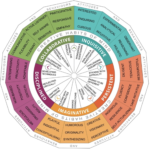
These creative behaviours and habits are set out in the Creative Habits of Mind model developed originally by Claxton, Lucas and Spencer. The model includes the development of:
- Imaginative Learners
- Disciplined Learners
- Collaborative Learners
- Inquisitive Learners
- Persistent Learners
See Links to Big Landscape Learning Theory and Behavioural models
Teacher Plan, Prepare & Deliver
Developing learning habits & behaviours to promote creativityCreativity is a characteristic of someone or some process that forms something new and valuable. The created item may be intangible or a physical object. Scholarly interest in creativity is found in a number of disciplines, primarily psychology, business studies, and cognitive science. Creativity is a tendency to generate, make or recognise ideas, propositions and possibilities that bring into existence something new, innovative or different. Imaginative activity fashioned so as to produce outcomes that are both original and of value. Creativity is the ability to create items that inspire and inform others, often in aesthetically pleasing ways. Creativity is thinking outside of society's norm. It is being able to express oneself in different varieties of arts - painting, poetry, sculpture, style, fashion, etc.
A curriculum formed from broad experiential opportunities in varied media, processes and techniques, alongside rigorous cognitive challenges, to inform ideas, discourse, practical and creative challenges, with respect for other cultures.
Using Projects, Briefs and Assignments:
- Organise the learning experience through tasks & contextual information.
- To determine the Knowledge & skills to be acquired/developed/gained.
- Using assessmentIn education, the term assessment refers to the wide variety of methods or tools that educators use to evaluate, measure, and document the academic readiness, learning progress, skill acquisition, or educational needs of students. to improve outcomes, understanding & improve progressIn education, progress refers to a student's grasp of essential knowledge and educational skills. In the past, a student was considered to be progressing if they were rapidly moving on to new topics and material. Source..