The concept of cultural capital refers to the knowledgeFacts, information, and skills acquired through experience or education; the theoretical or practical understanding of a subject., values, skillsTechniques and attributes acquired through learning, engagement and practice and attitudesAttitude as a term of fine art refers to the posture or gesture given to a figure by a painter or sculptor. It applies to the body and not to a mental state, but the arrangement of the body is presumed to serve a communicative or expressive purpose. that individuals acquire through their upbringing, education, cultural and social experiences.
It is a term that is often used to explore the proposition that the acquisition of ‘cultural capital’ by – an individual – may confer social and economic advantage.
In this respect, it is inextricably linked to ideas of equity and inclusion which teachers of artArt refers to a diverse range of human intellectual and expressive activities and the outcomes of those activities. Within this context art is further defined as visual art and includes painting, drawing, sculpture, printmaking, photography and work made using digital media., craftCraft can be designed as intelligent making. It is technically, materially and culturally informed. Craft is the designing and hand making of individual objects and artefacts, encouraging the development of intellectual, creative and practical skills, visual sensitivity and a working knowledge of tools, materials and systems. More about craft can be found here and designDesign shapes ideas to become practical solutions and propositions for customers and users. Design is all around us, everything man made has been designed. The majority of designers work in teams, following a design brief and a process towards realising a commercially driven product, building, system or service, or indeed all arts subjects, need to consider in their teaching.
Cultural capital was first explored in 1986 by Pierre Bourdieu (1930-2002) a French sociologist who was concerned with the dynamics of status and power in society.
Bourdieu reflected upon the capacity of different types of capital, including economic, cultural, social and symbolic, to confer power, influence and status to those who acquire it, to the consequent disadvantage to those who do not.
The Cultural Learning Alliance (CLA) refers to more recent research which takes account of further forms of cultural capital which can influence a student’s opportunities, social and economic and prospects.
The CLA and NSEAD ask that all cultural forms or expressions (particularly music, dance or visual arts) and that definitions of cultural capital celebrate different backgrounds, heritage, language and traditions of all learnersA learner is an individual who is willing to learn and understand new things. Learning is a process of understanding and acquiring knowledge of new things and concepts. An individual can be a learner at any point in time they want. Factors like age, gender, etc., do not come in between the learning of the learner..
Cultural Development (Cultural Capital)
To achieve the broadest range of cultural development, makingThe process of making or producing something. The making of meaning is a decisively integral component of art-making. Meaning-making in relation to the creation of art serves a symbolic and practical purpose. On a symbolic level, the essence of meaning-making is highlighted when we encounter works of art that are of an abstract nature. connections across subjects, connected with practice to promote awareness and enjoyment to inform, promote plurality, contextualise learning, work respectfully and make connections between all knowledge and information in:
- Art , Craft & Design
- Music and Performance
- Drama
- Theatre and Dance
- Literature
- Classics
- Humanities
- Mathematics
- The Sciences
Read more about Cultural Capital in NSEAD's ARAEA resources
View Cultural Capital and Art, Craft and Design Education, Dr Clare Stanhope, ARAEA member, head of art and researcher, describes the vital contribution art, craft and design and cultural capital make to our lives.
Visit NSEAD Inspirations to view nine films that define and Cultural Capital in Art and Design Education. These short films were curated and created by the NSEAD Group for Cultural Capital.
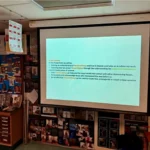
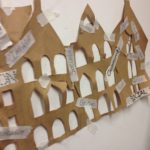
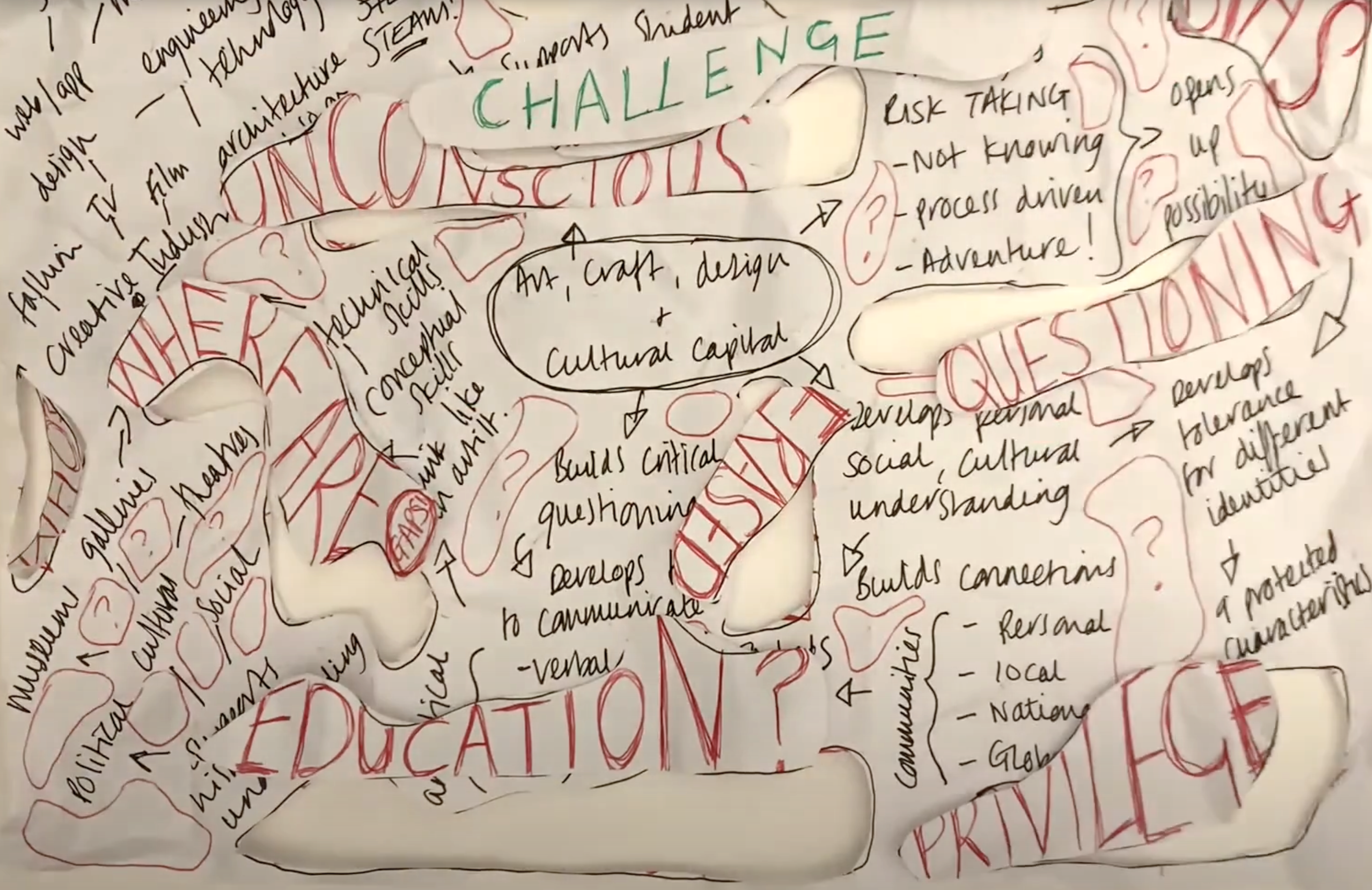
Image: Conversations around cultural capital, Dr Clare Stanhope, 2022