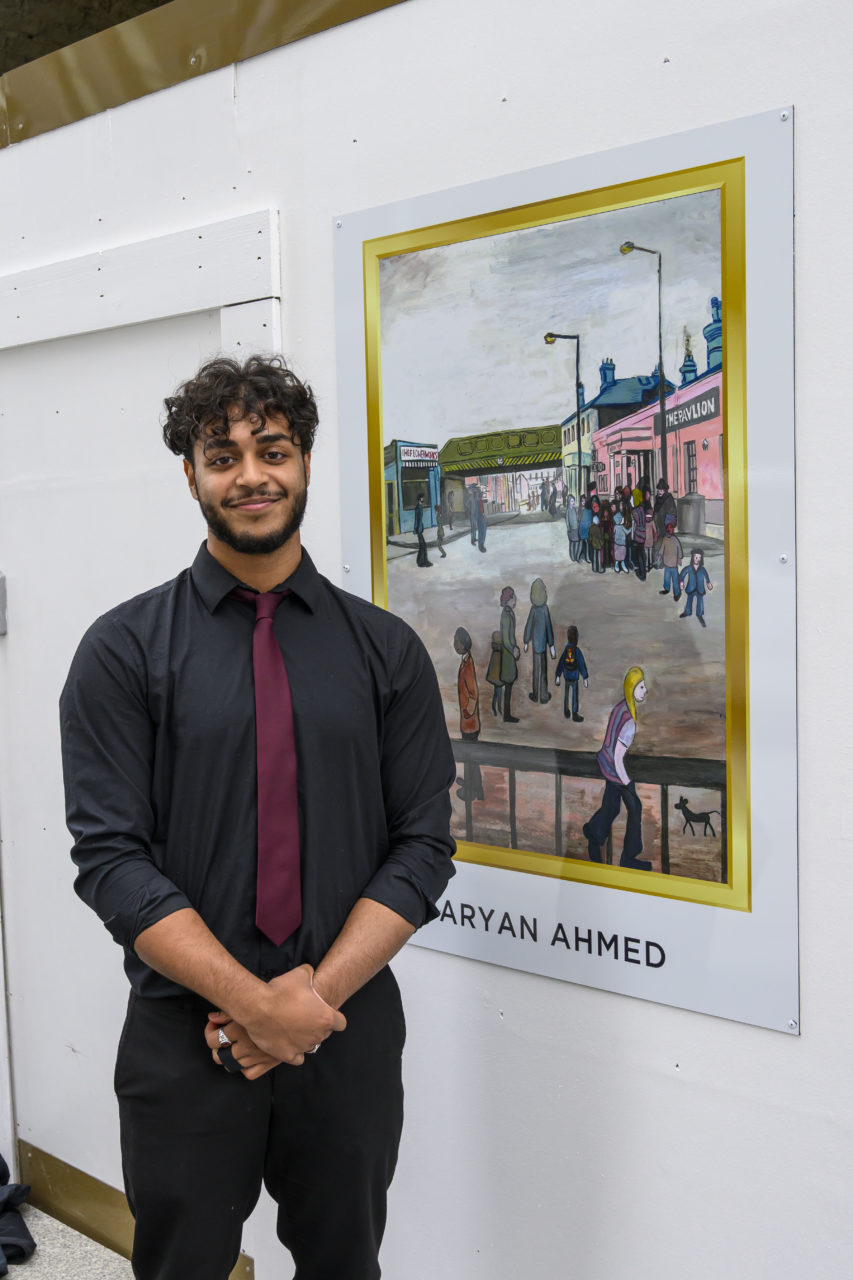
We were approached by St James, part of the Berkeley Group, to take part in an initiative called ‘What does White City mean to you?’.
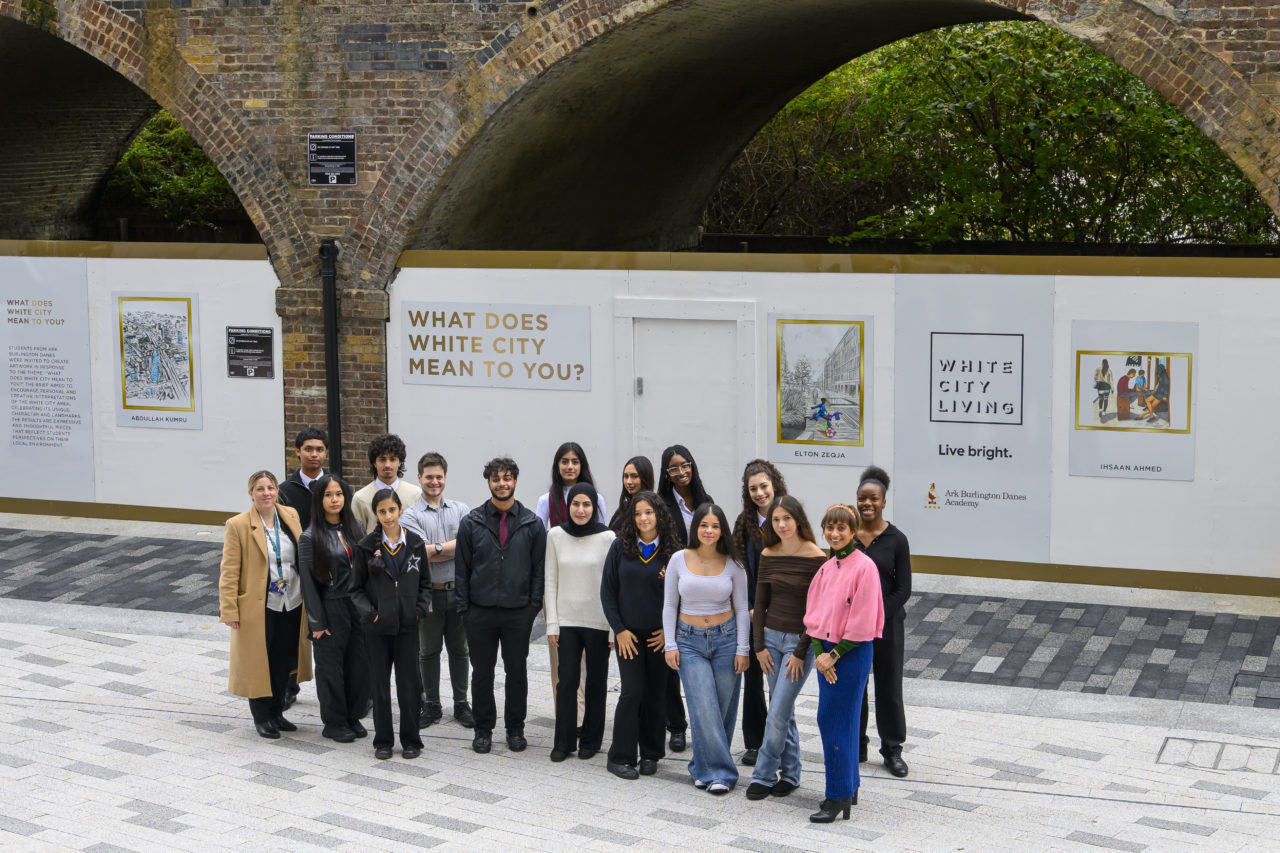
The project’s intent was to showcase White City in West London through the eyes of young artists in years 10-13 (ages 14-18) at Ark Burlington Danes Academy. Their work would then be showcased at a special public open-air art installation at St James’ White City Living development.
This project aimed to deepen students’ critical understanding of White City, where Ark Burlington Danes Academy is based, by exploring its rich local history, architecture, culture, and communities.
My goal was not only to familiarise students with the area but to encourage them to see it as a living, layered environment shaped by people, politics, and place. By engaging with its past and present – from the 1908 Franco‑British Exhibition held in White City, to its contemporary transformation into a contemporary hub for media, science, and commerce – students could build a deeper sense of connection to their surroundings.
Alongside this contextual background, an important aim for me was to nurture students’ ability to use research, photography, and first‑hand observation as catalysts for creative work. They were encouraged to step outside the classroom to immerse themselves in the area – to gather visual references, and observe details of character, design, and daily life.
This emphasis on fieldwork helped students become more attentive and analytical, and it allowed them to build a personal archive of images that later informed their artistic choices.
Another core aim was to support students in developing their own artistic identities. Through experimentation with a wide range of materials, styles, and influences in our lessons, they explored what resonated with them and how they could express their ideas visually.
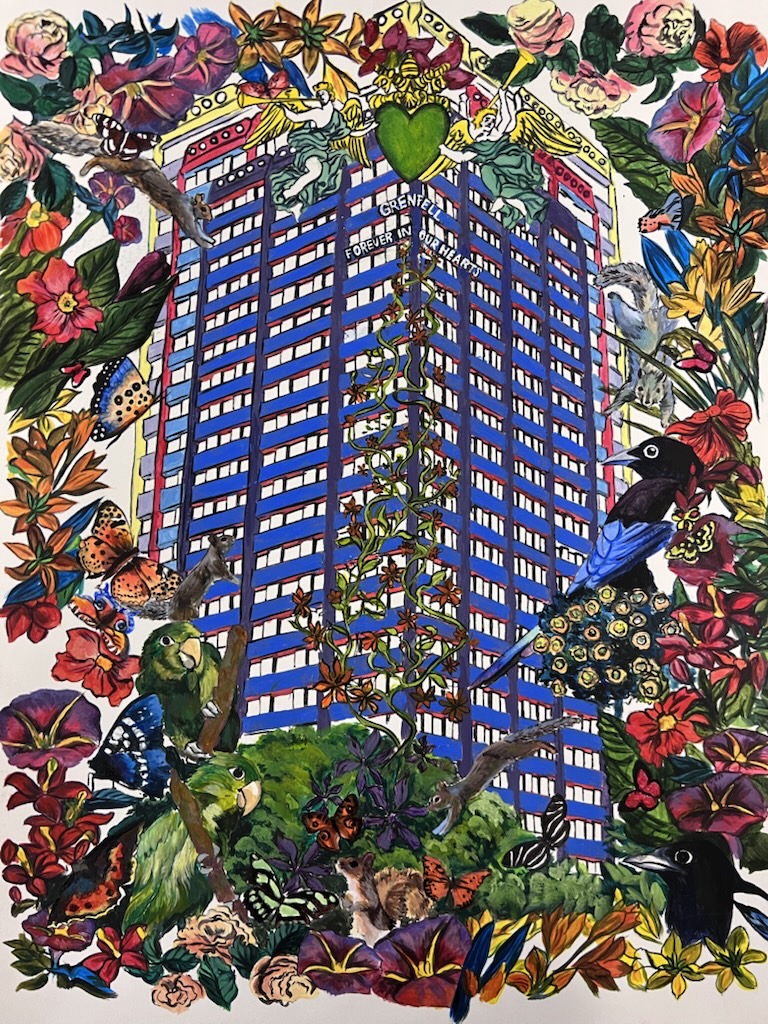
This experimentation was closely linked to broader questions about representation, place, and belonging. Students were challenged to think critically about how communities are depicted, who tells those stories, and how sensitive topics – such as the Grenfell Tower fire, equality, and community care – can be approached with respect and responsibility.
Ultimately, the project aimed to guide students in transforming their research into meaningful visual storytelling that reflected their own interests, values, and lived experiences.
 Learning was organised to create a strong connection between research and creativeBeing creative or 'creativity' relates to or involves the use of the imagination or original ideas to create something. practice. Students began with fieldwork across White City, Shepherd’s Bush, and Wood Lane, using photography to documentTo record or observe and make written, visual or digital notes from an event, performance or place key sites and capture the atmosphere of each location. These photographs formed the backbone of later observational drawings and compositions.
Historical and contextual research was integrated throughout our lessons in the classroom so students could understand how the area has evolved over time, giving their artwork a real level of intellectual depth as well as visual interest.
Class discussions played an important role in helping students make connections between local history and wider themes such as identity, community, and cultural change.
In the studio, students analysed the work of artistsPeople who are engaged in a broad spectrum of visually led ideas and activities aligned to the expressive arts like Édouard Manet and contemporary illustrators such as Lucille Clerc, studying compositionThe combination of a selection of distinct elements to work towards creating a whole image or form. The arrangement of shapes, colours, textures, marks and lines in a painting. A composition is something that is put together - it is an arrangement of different elements. In art, the visual elements are combined by paying attention to things such as balance, harmony, rhythm and contrast to give a unified whole. Sometimes composition is used to refer to one piece of art work, such as a painting, symbolismApart from its simple association with symbols, the term symbolism also refers to a movement in art. The symbolists were a group of artists living in 19th century France. They rejected naturalism and wanted to vividly express thoughts and feelings using fantasy and symbols. Odilon Redon (1840-1916) and Gustave Moreau (1826-1898) were among its chief practitioners., and stylistic decision‑makingThe process of making or producing something. The making of meaning is a decisively integral component of art-making. Meaning-making in relation to the creation of art serves a symbolic and practical purpose. On a symbolic level, the essence of meaning-making is highlighted when we encounter works of art that are of an abstract nature.. This helped them understand how artists use visual language to communicate ideas and emotions.
Through a structured and iterative processA series of actions, changes or operations performed in the making or creating of a product or outcomes. The procedures that one goes through in creating an art-work, e.g.: the process of printmaking. – research, observation, experimentation, refinement, final artwork – students developed sketches from their own photographs, received feedback, and experimented with materialsThe resources that artists, craftspeople and designers use to create work, to include thread, plastic, stone, wood, clay, paint and paper ranging from alcohol markers and fine liners to acrylic paintA coloured substance that can be thickened or thinned and spread over surfaces. Paint can be water soluble, oil or plastic based, and have opaque or transparent qualities. For further information please follow thus link. Paint is made up from three main things: pigment, to give it colour; a medium, (such as oil) which is used to support the pigment; and 38 something to thin it down, such as water or turpentine. and mixed mediaDifferent materials used by artists, such as paint, charcoal, clay and thread. Media is the plural of MEDIUM. In this context, it refers to the thing, substance or process you use to produce an artwork. For example, an oil painting is painted using the medium of oil paint; paint, ink and clay are different media. It is also used to refer to something that binds pigments together, such as oil, acrylic, gum, egg yolk or wax.. This cycle allowed them to gradually refine both their technical skillsTechniques and attributes acquired through learning, engagement and practice and their artistic intentions.
In my view, the project met its aims very successfully. Students demonstrated a strong ability to connect research with creative expression, and their final artworks clearly reflect an understanding of White City’s layered history and cultural significance.
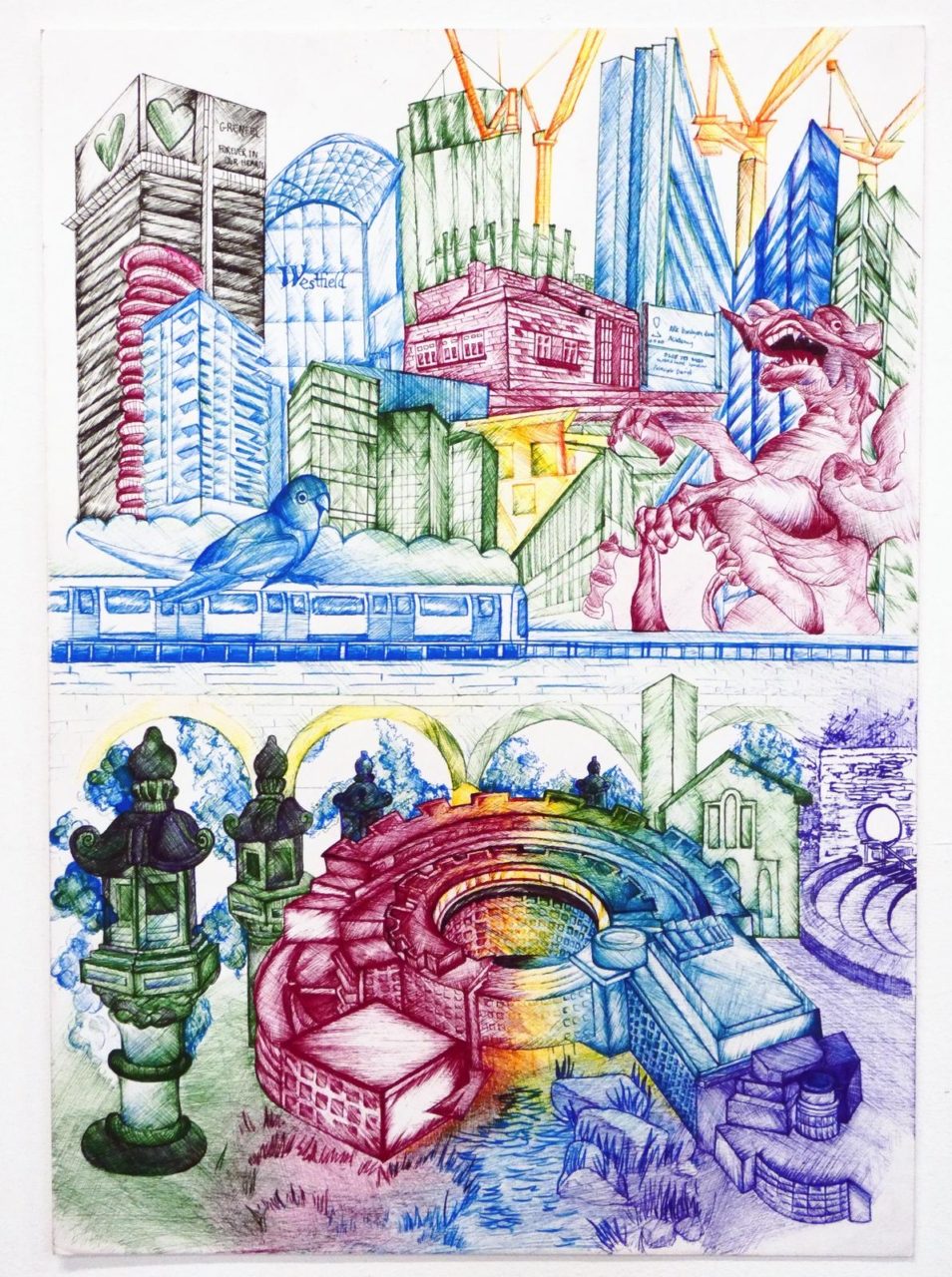
The outcomes of the artArt refers to a diverse range of human intellectual and expressive activities and the outcomes of those activities. Within this context art is further defined as visual art and includes painting, drawing, sculpture, printmaking, photography and work made using digital media. compositions are deeply integrated with social and political issues. They explore respect for the elderly; the celebration of family life and having children; music and busking as forms of cultural expression; love and personal connection; and social change.
This change is illustrated through a shift of traditional imagery. For example, one student studied Manet’s A Bar at the Folies-Bergère(1882), which features a white waitress as the central subject. changed this figure to a mixed‑heritage waitress – as a symbolAn image which represents something. It can be a traffic sign (such as a train to warn of a level crossing), or it can be a white dove to represent peace. If you were to see a light bulb above someone’s head in a comic book, you would know that it stood for a sudden brilliant idea - the light bulb would be a symbol. of justice, equality, and representation. Other artworks move between celebrating happiness and confronting collective sadness, notably reflecting on the Grenfell Tower fire.
Their use of personal photography as the basis for compositions showed confidence and intention, while their engagement with themes such as representation, equality, and youth identity revealed maturity and thoughtfulness.
Our students experimented with a wide range of materials, processes and styles, producing imaginative and personal responses that translated local research into expressive visual narratives rooted in their own perspectives.
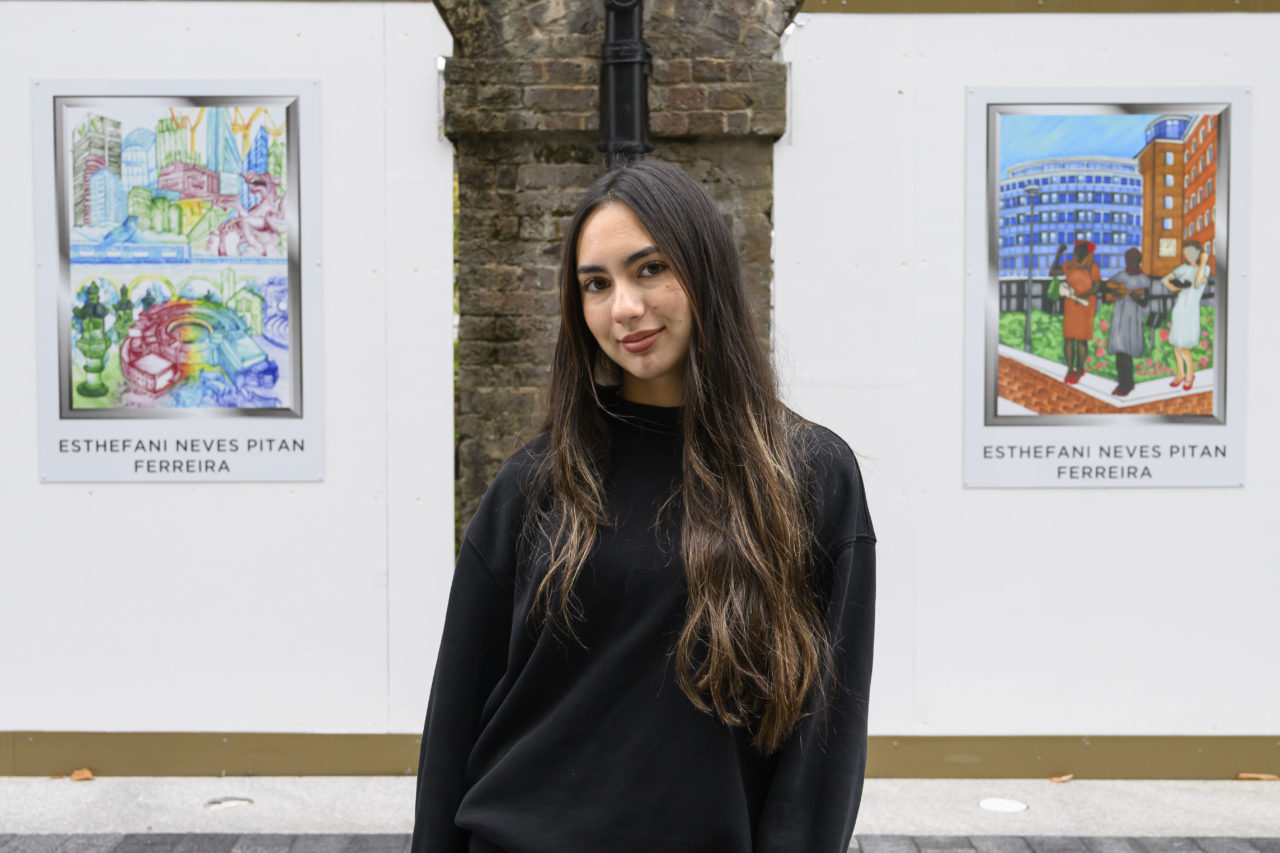
The final collection of artworks – which is currently showcased in a special public art installationInstallation art describes an artistic genre of site-specific, three-dimensional works designed to transform the perception or shape of a space at White City Living – reflects not only the character, but also the rich cultureThe behaviours, beliefs and activities of a social, geographical, age defined or ethnic group of people, to include their artistic and creative pursuits of White City.
It showcases the students’ growth as young artists who can observe, interpret, and communicate meaning through art. It demonstrates their ability to look closely at a place, think criticallyArt criticism, is the analysis and evaluation of works of art. More subtly, art criticism is often tied to theory; it is interpretive, involving the effort to understand a particular work of art from a theoretical perspective and to establish its significance in the history of art. about its stories, and create work that is both reflective and original.